

Thoughts on Jiu-Jitsu, Psychology and Living Well
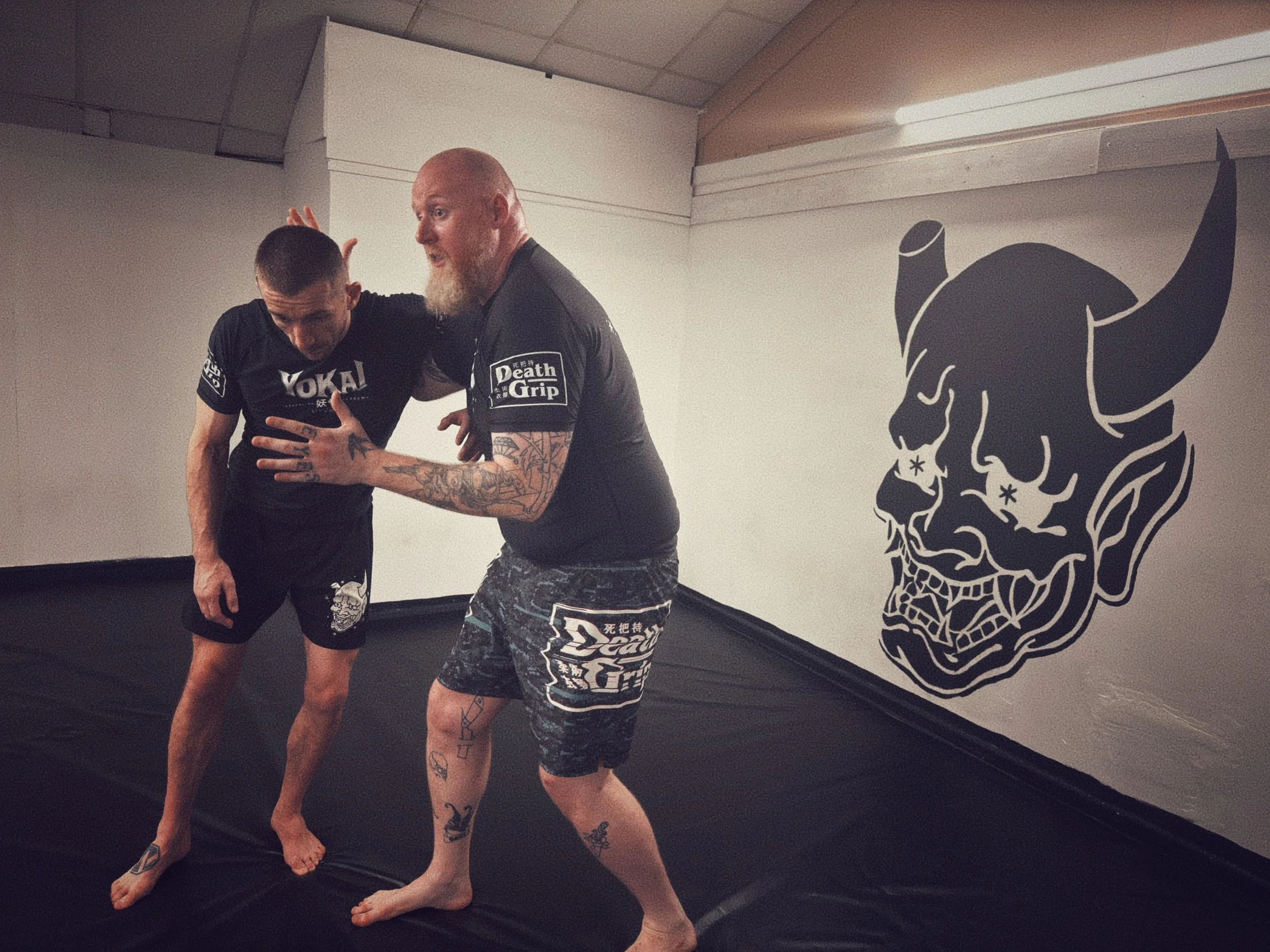
If you’ve found your way to this little space on the internet, welcome.
This isn’t a technique blog. There are already plenty of excellent places to learn how to finish an armbar, escape side control, etc. I’ll occasionally write about techniques, but that’s not what interests me the most.
What fascinates me is people and what happens to them when they step on the mat.
For over fifteen years, BJJ has given me a front-row seat to human nature.
I’ve watched confident people discover humility. I’ve watched anxious people thrive and find a new version of themselves. I’ve watched self-described “unathletic” people surprise themselves in competition, not because they were naturally gifted, but because they kept returning to the mats.
Running a gym has only reinforced that lesson. Every week I meet people from different backgrounds, professions and stages of life, yet many of them wrestle with the same questions. Why do we compare ourselves to others? Why do we avoid difficult things? Why does failure feel so personal? And what helps us keep going when progress feels painfully slow?
Alongside coaching, I'm training as a psychotherapist, and I've come to realise that the lessons from the therapy room and the lessons from the mats often overlap. Both ask us to become more honest with ourselves. Both require patience. Both remind us that meaningful growth rarely happens without discomfort.
This space is where I'll explore those ideas.
I'll talk about jiu-jitsu, certainly. But I'll also talk about psychology, fatherhood, learning, resilience, confidence, and the quieter lessons that often go unnoticed.
My hope is that whether you train or not, you'll find something here that helps you think a little differently about yourself and the life you're leading.
First thought I wanted to talk about was…
Why Adults Are Afraid to Start Brazilian Jiu-Jitsu
One of the most common things I hear isn't from white belts. It's from people who never make it through the door.
"I've been thinking about trying it for ages."
"I keep meaning to come."
"I just need to get a bit fitter first."
"I don’t want to look like an idiot."
On the surface, these sound like practical reasons. But after years of coaching adults, I don't think they're really about fitness or timing.
I think they're about vulnerability.
Children don't usually have a problem looking silly. They'll fall over, get things wrong and laugh about it before trying again.
Adults are different.
By the time we reach our thirties and forties, many of us have quietly built an identity around being competent. We know our jobs. We know how to socialise. We know how to avoid situations where we'll look out of our depth.
Then along comes Brazilian Jiu-Jitsu. You hear mates talking about it. You see it creeping into mainstream society. You feel like trying it and within minutes, you're wearing unfamiliar clothing, trying to remember strange Japanese or Portuguese names, and being gently folded into shapes you didn't know were possible by someone half your size.
It's uncomfortable.
Not just physically.
Psychologically.
Because BJJ strips away competence. It asks you to become a beginner again.
That's frightening.
Not because you'll get hurt, good academies work hard to keep people safe and Yokai is certainly no different, but because your ego suddenly has nowhere to hide.
The irony is that the people already training don't expect you to be good.
In fact, they expect exactly the opposite.
Every black belt in the room was once the person who couldn't hip escape properly.
Every experienced student remembers feeling awkward, confused and exhausted.
Nobody is judging you for being a beginner.
They're usually far too busy remembering what it felt like to be one themselves.
The real obstacle isn't other people's opinions. It's the story we tell ourselves. We imagine everyone is watching us. We imagine we'll be the least coordinated person there. We imagine we'll never improve.
Psychologists sometimes refer to this as the "spotlight effect", that is, our tendency to overestimate how much other people notice and evaluate us. In reality, most people are focused on their own training, not on keeping score of your mistakes.
I've seen people delay starting for years because they wanted to arrive fitter, stronger or more confident.
What they rarely realise is that training is precisely what develops those qualities.
Confidence isn't a ticket you buy before you start.
It's something you earn by surviving hundreds of moments where you thought, "I can't do this," and discovering that you can.
The people I admire most in jiu-jitsu aren't necessarily the most talented. They're the ones who kept turning up while feeling uncomfortable. That's true on the mats, and it's true in life.
If you're reading this because you've been thinking about trying Brazilian Jiu-Jitsu, here's my advice: Don't wait until you feel ready.
You probably never will.
Instead, accept that you'll feel awkward.
Accept that you'll make mistakes.
Accept that you'll tap often.
Those aren't signs that you're failing.
They're signs that you're learning.
And if you do decide to walk through the doors of a good academy, you might discover something surprising.
The hardest part of Brazilian Jiu-Jitsu isn't your first class.
It's deciding to come to it.
Everything after that gets a little easier.
Closing Thoughts
If these words have spoken to you, I'd love to hear your thoughts.
And if you're someone who's been putting off starting Brazilian Jiu-Jitsu because of nerves, uncertainty, or self-doubt, I'd be happy to answer any questions you have. No sales pitch, just an honest conversation.
If you're in or around Liverpool, you're also welcome to come and experience a class for yourself. The culture of a gym matters just as much as the coaching, and I think you'll quickly understand why so many people tell us they stayed because of the vibe.
You can get in touch through the website or social media either the Yōkai one or my own. I'd love to meet you.
https://www.instagram.com/philbennettartist/
Phil.